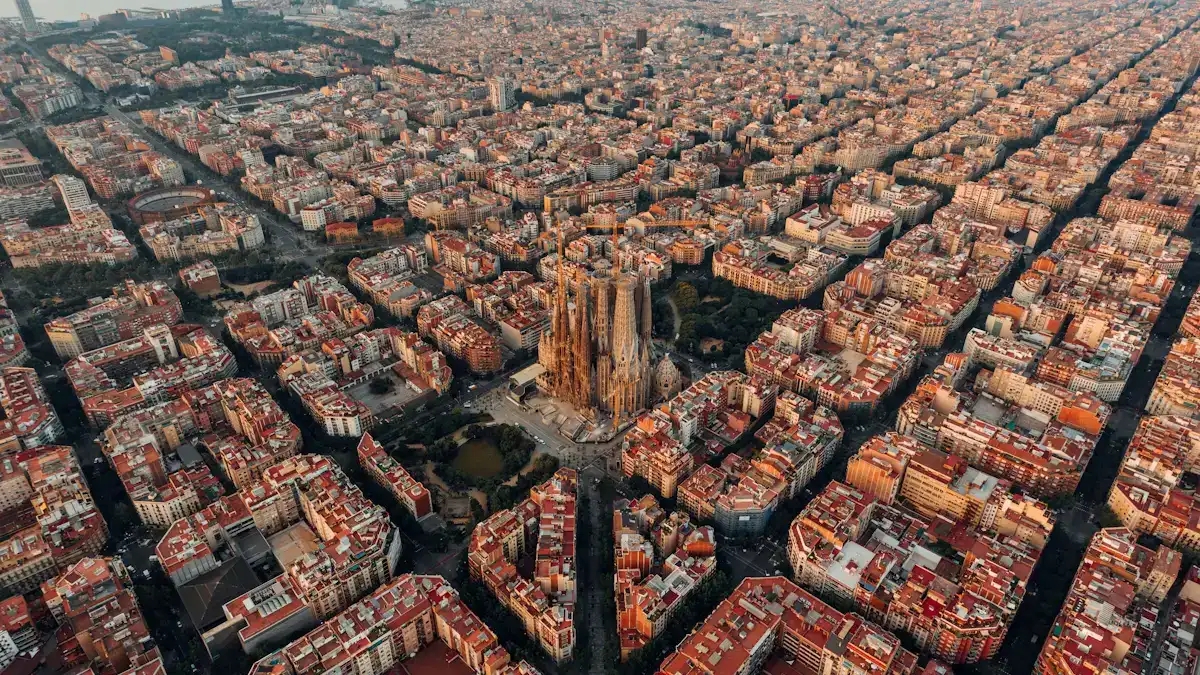
Few cities pack as much into a long weekend as Barcelona. In the space of a single day you can tour a basilica unlike any other building on earth, eat lunch from a market stall, swim in the Mediterranean and finish with tapas at ten o'clock at night, because nobody here eats dinner early. This guide covers what to see, where to sleep and how to avoid the common mistakes.
When to Go
May, June, September and October are the most comfortable months, warm enough for the beach without the heavy heat and crowds of high summer. July and August are hot, humid and busy. Winters are mild and good for sightseeing at lower prices, though too cool for swimming.
How Many Days?
Three or four days covers the main sights at a relaxed pace. A fifth day gives you time for an excursion to Montserrat, Girona or the seaside town of Sitges.
The Essential Sights
Sagrada Família
Antoni Gaudí's great basilica has been under construction since 1882 and is finally approaching completion. Inside, columns branch like trees toward the ceiling and stained glass floods the nave with color. Entry is by timed ticket only, sold online, and slots sell out days or weeks ahead in high season. Late afternoon gives the best light.
Park Güell
A hillside park of mosaic benches, gingerbread-style gatehouses and the famous tiled salamander. Visitor numbers in the monumental zone are capped, so reserve a time slot. Go early or late in the day for cooler temperatures and better photographs.
Casa Batlló and Casa Milà
Two of Gaudí's apartment buildings stand a few blocks apart on Passeig de Gràcia. Casa Batlló is known for its bone-like balconies and shimmering facade, Casa Milà, or La Pedrera, for a rooftop of sculpted chimneys. If your budget stretches to only one, Casa Batlló has the more striking interior.
The Gothic Quarter and El Born
The medieval center is a maze of narrow streets, hidden courtyards and small squares. See the cathedral, pause in Plaça Reial, then cross into El Born for the Picasso Museum and the soaring church of Santa Maria del Mar. The district is at its best in the early evening.
La Boqueria
The city's most famous food market sits just off La Rambla. Come in the morning for fresh juice, cured ham, cheese and seafood. Stalls deeper inside are generally better value than those at the entrance.
Barceloneta
The main city beach is a short metro ride from the center. Walk the promenade, swim, and stop at a beach bar known as a chiringuito. The beaches further north, such as Bogatell, are less crowded.
Montjuïc
Take the cable car or funicular up this hill for wide views of the port and city. At the top you will find the castle, the Joan Miró Foundation, the Olympic stadium and the National Art Museum of Catalonia.
Where to Stay
- Eixample: Elegant grid streets, Gaudí buildings and excellent transport. The most convenient all-round choice.
- Gothic Quarter: Historic and central, though some streets are noisy at night.
- El Born: Fashionable, full of bars and restaurants, close to both the old town and the sea.
- Gràcia: A village-like neighborhood with leafy squares and a local feel.
- Barceloneta: For being steps from the beach.
Compare prices across these areas on SkySparrows hotels. Barcelona adds a nightly tourist tax to accommodation bills.
Getting Around
The metro is clean, air-conditioned and easy to use. A multi-journey card such as the T-casual, which holds ten rides, is far cheaper than single tickets. From the airport, the Aerobús reaches Plaça de Catalunya in about 35 minutes, and metro line L9 Sud connects both terminals to the network. Most of the old town is best explored on foot.
Eating and Drinking
- Meals run late. Lunch is around 2 p.m. and dinner seldom starts before 9 p.m.
- The weekday menú del día is a set lunch of two or three courses with a drink at a very fair price.
- Order pa amb tomàquet, bread rubbed with tomato and olive oil, and try fideuà, a noodle-based relative of paella.
- Restaurants with photo menus on La Rambla are aimed at tourists. Walk a few streets away for better food at lower prices.
Staying Safe
Barcelona is safe in general, but pickpocketing is a persistent nuisance around La Rambla, on the metro and at the beach. Keep your phone in a front pocket, use a bag that zips and is worn across the body, never leave belongings unattended on the sand, and be cautious of strangers who create a distraction.
Frequently Asked Questions
Do I have to book the Sagrada Família ahead?
Yes. Tickets are timed and sold online only. In spring and summer, reserve at least a week or two in advance.
Is Barcelona expensive?
It is more affordable than Paris or London. Set lunches, multi-ride transport cards and free attractions such as the beaches and the old town keep spending under control.
How do I travel between Barcelona and Madrid?
High-speed trains make the journey in about two and a half hours. See our Europe by train guide for booking advice.
Plan Your Visit
Reserve the Gaudí sites first, choose a neighborhood that fits your style and leave your evenings open. Start by comparing flights to Barcelona for your preferred dates.