Americans tend to think of trains as slow and scenic. In much of Europe they are the fast option. A high-speed service will carry you between two capital cities in the time it takes to get through airport security and wait at the gate, and it will deliver you to a station in the middle of town rather than a terminal 20 miles outside it. Understanding how the network works opens up a far more relaxed way to travel.
Why Take the Train?
- Stations are central. You step off the train and walk to your hotel, with no airport transfer to pay for.
- Boarding is simple. On most routes you can arrive 15 to 20 minutes before departure.
- Luggage rules are relaxed. There are no liquid limits and usually no charge for a normal suitcase.
- The seats are roomy. You get legroom, a table, power sockets and freedom to walk to the café car.
- The views are part of the trip. Alpine valleys, vineyards and coastlines pass by your window.
- Emissions are much lower than for an equivalent flight.
The Kinds of Train You Will Use
High-Speed Services
These are the backbone of long-distance travel and run at up to 200 mph. France has the TGV, Germany the ICE, Italy the Frecciarossa and Italo, and Spain the AVE. Eurostar links London with Paris, Brussels and Amsterdam through the Channel Tunnel. Most require a seat reservation, and tickets are cheapest when bought early.
Regional Trains
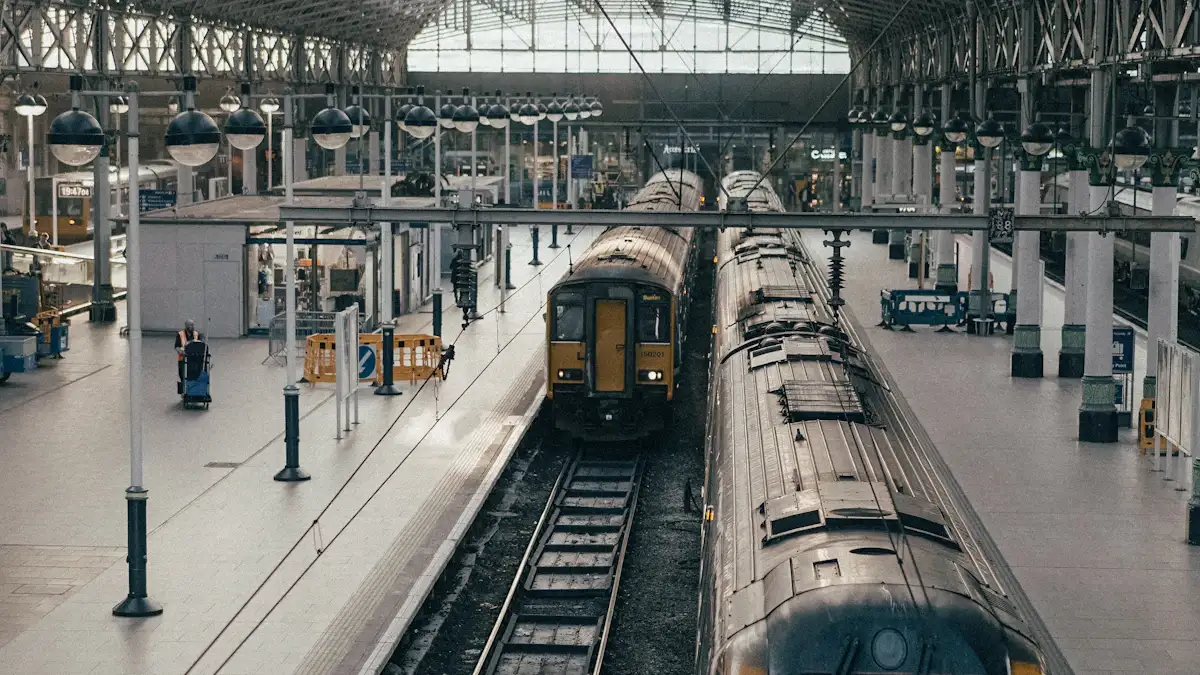
Slower regional services connect smaller towns and villages. Fares are generally fixed and seats are not reserved, so you can simply buy a ticket on the day and board.
Sleeper Trains
Overnight trains have made a strong comeback. Operators such as ÖBB Nightjet run routes including Vienna to Paris and Munich to Rome. You travel while you sleep and save a hotel night. Choices range from a reclining seat to a shared couchette or a private cabin with its own shower.
Well-Traveled Routes
- London to Paris: around 2 hours 20 minutes on Eurostar
- Paris to Amsterdam: around 3 hours 20 minutes
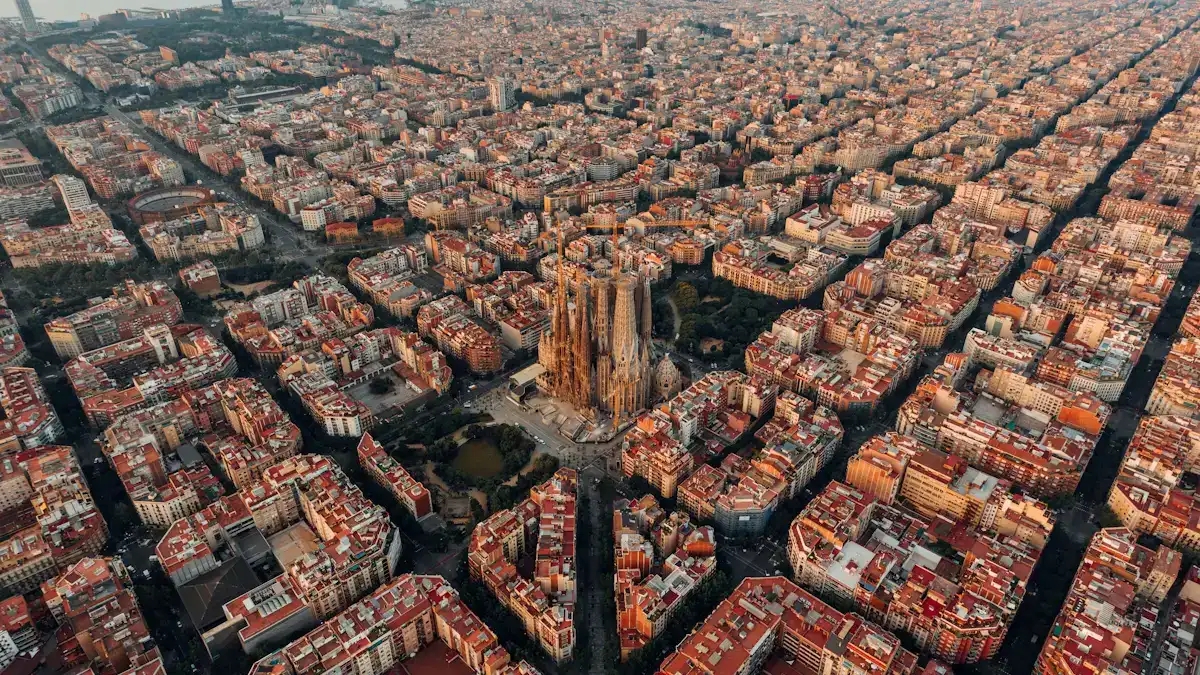
- Paris to Barcelona: around 6 hours 30 minutes
- Rome to Florence: around 1 hour 30 minutes
- Florence to Venice: around 2 hours 15 minutes
- Madrid to Barcelona: around 2 hours 30 minutes
- Munich to Vienna: around 4 hours
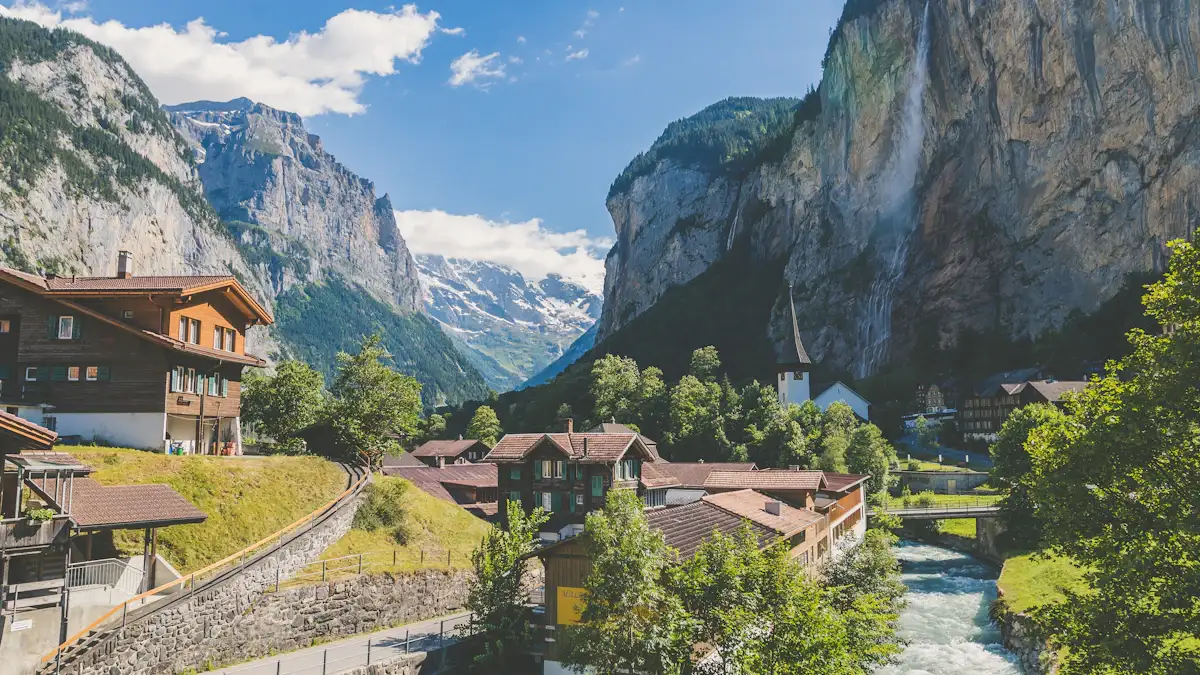
- Zurich to Milan: around 3 hours 20 minutes through the Alps
The Italian legs are covered in our Rome, Florence and Venice itinerary, and the mountain routes in our Switzerland travel guide.
Individual Tickets or a Rail Pass?
Individual Tickets
If your itinerary is fixed and you are making a small number of journeys, separate tickets bought in advance are normally the cheapest route. Booking usually opens between two and six months before travel, and the lowest fares go first.
Eurail Pass
A Eurail Global Pass gives non-European residents travel across more than 30 countries. It makes sense when you plan many long journeys, want to decide as you go, or are visiting countries with expensive walk-up fares such as Switzerland and Germany. Remember that many high-speed and night trains still need a paid seat reservation on top of the pass.
Single-Country Passes
If you are staying within one country, a national pass can be better value. The Swiss Travel Pass, for instance, also includes buses, lake boats and entry to many museums.
Advice for a Smooth Journey
- Buy high-speed tickets as early as you can; prices climb as the train fills.
- Large cities have several main stations. Confirm which one your train uses.
- Where regional paper tickets must be validated, stamp them before boarding.
- Carry a bag you can lift into an overhead rack and manage on stairs.
- Use the operator's official app for live platform numbers and delay alerts.
- Leave a sensible gap between connections, especially on international routes.
- Bring food and water for long trips, even if a dining car is advertised.
When a Flight Makes More Sense
Rail is unbeatable for trips of up to about four or five hours. For longer distances, such as London to Rome or Paris to Athens, or for islands, flying is quicker and often cheaper. The most efficient European itineraries mix the two. You can compare air options on SkySparrows flights.
Frequently Asked Questions
Is the train cheaper than flying in Europe?
It depends on the route and how far ahead you book. Advance rail fares on busy corridors are very competitive once you add airport transfers and baggage fees to a flight. Last-minute train tickets can be expensive.
Are seat reservations compulsory?
On most high-speed, international and overnight trains, yes. On regional services, generally not.
Can I just buy a ticket at the station?
You can, and for regional trains it costs the same. For high-speed services, buying on the day is usually far more expensive, and popular departures may be full.
Next Stop
Train travel lets you watch Europe unfold between cities rather than skipping over it. Reserve the fast trains early, pack light and consider hotels near major stations to make arrivals and departures effortless.