Switzerland looks exactly the way the brochures promise: sharp white peaks, green valleys dotted with wooden chalets and lakes so clear they seem unreal. It is also one of the easiest countries in the world to travel through, thanks to trains, buses and boats that connect to the minute. The one catch is cost, and with some planning even that can be managed.
Choosing a Season
- Late June to September: The main hiking season. Trails are free of snow, cable cars are running and alpine meadows are in bloom.
- December to March: Winter sports season, with skiing and snowboarding in resorts such as Zermatt, St. Moritz and Verbier.
- May and October: Quieter and cheaper, but many mountain lifts close for maintenance. Check before you go.
Mountain weather changes fast in any month. Pack layers and a waterproof shell, and look at the summit webcams before paying for an expensive ascent.
Where to Go in the Alps
Interlaken and the Jungfrau Region
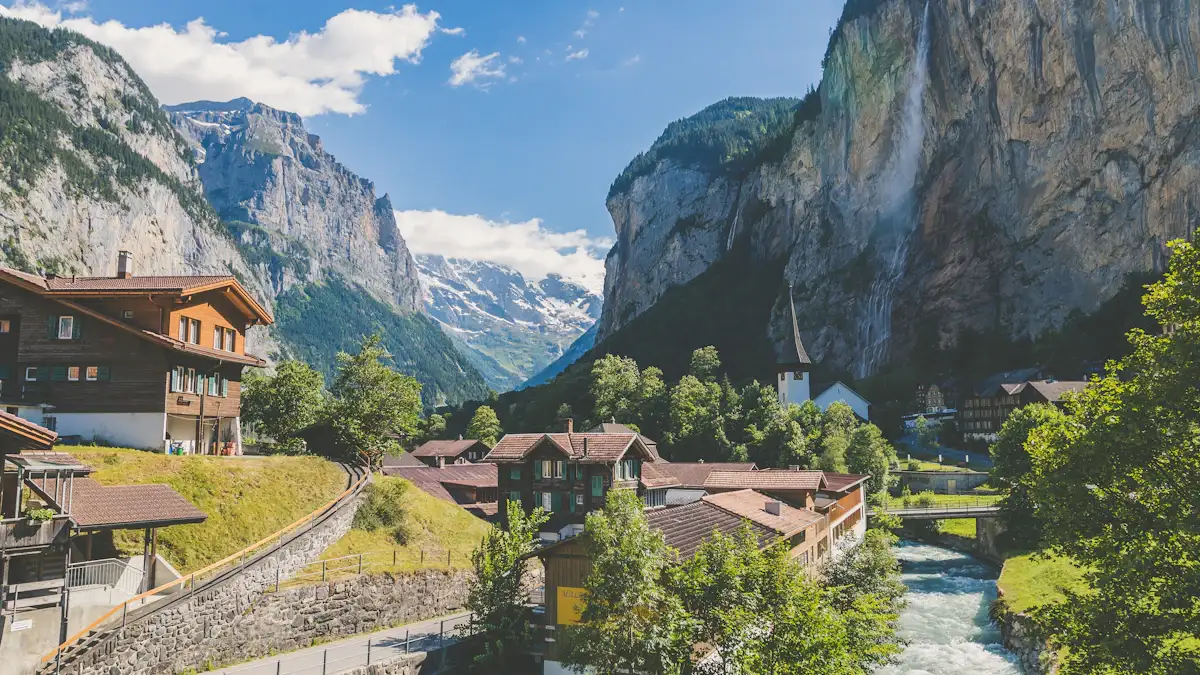
Interlaken lies between two lakes and is the gateway to the Bernese Oberland. A short train ride away, the Lauterbrunnen valley is lined with sheer cliffs and 72 waterfalls. Above it are the car-free villages of Wengen and Mürren, and the cog railway to Jungfraujoch, the highest railway station in Europe at 11,332 feet. Grindelwald offers the First cliff walk and close-up views of the Eiger's north face.
Zermatt and the Matterhorn
Car-free Zermatt sits beneath the most recognizable mountain in the Alps. Take the Gornergrat railway for a panorama of the Matterhorn and surrounding glaciers, or ride the cable car to the Matterhorn Glacier Paradise. The village is reached by train only.
Lucerne
A graceful lakeside city with a medieval wooden Chapel Bridge and a compact old town. It is the starting point for trips up Mount Pilatus, Mount Rigi and Mount Titlis, and works well as a first or last stop because it is under an hour from Zurich.
Lake Geneva
The French-speaking southwest feels gentler and more Mediterranean. Visit Montreux and the lakeside Château de Chillon, walk among the terraced vineyards of Lavaux and spend a day in Geneva or Lausanne.
Scenic Rail Journeys
- Glacier Express: An eight-hour panoramic ride between Zermatt and St. Moritz over 291 bridges.
- Bernina Express: From Chur across the Alps to Tirano in Italy, on a UNESCO-listed line.
- GoldenPass Line: Linking Lucerne, Interlaken and Montreux through three distinct landscapes.
- Gotthard Panorama Express: A combined boat and train trip from Lucerne to the Italian-speaking south.
Panoramic trains need a seat reservation even if you hold a rail pass. Our Europe by train guide has more on planning rail trips.
The Swiss Travel Pass
The Swiss Travel Pass gives unlimited travel on trains, buses and boats for a set number of days, along with free admission to more than 500 museums and discounts on most mountain railways and cable cars. It tends to pay off if you move every day or two. If you plan to stay in one region, compare it with the Half Fare Card or a regional pass such as the Berner Oberland Pass.
Where to Stay
- Interlaken: The broadest choice of accommodation and the best transport hub.
- Lauterbrunnen, Wengen or Mürren: For waking up to mountain scenery.
- Zermatt: For Matterhorn views, at premium prices.
- Lucerne: For a mix of city comfort and easy day trips.
Mountain villages have limited rooms and fill early in peak season. Check availability on SkySparrows hotels.
Keeping Costs Under Control
- Buy lunch from Coop or Migros supermarkets, which sell good ready-made meals.
- Refill your bottle at public fountains; the water is clean and free.
- Pick a rail pass that matches your route rather than buying full-price tickets.
- Ask your hotel for the local guest card, which often includes free buses and lift discounts.
- Travel in June or September rather than July and August.
- Hike. The trails are free and the views are as good as any paid excursion.
Useful Facts
- Currency: The Swiss franc (CHF). Cards are accepted almost everywhere.
- Languages: German, French, Italian and Romansh. English is widely understood in tourist areas.
- Entry: Switzerland is in the Schengen Area but not the EU. See our Schengen and ETIAS guide.
- Power: Type J sockets. Many two-pin European plugs fit, but bring an adapter.
- Tipping: Service is included. Rounding up the bill is a courtesy.
Frequently Asked Questions
How many days do I need?
Five to seven days is enough for two or three regions, for example Lucerne, the Jungfrau area and Zermatt. Ten days allows a more leisurely circuit with a panoramic train.
Is the Swiss Travel Pass worth buying?
If you are changing base frequently, usually yes. For a stay centered on one area, a Half Fare Card or regional pass is often cheaper.
Do I need a car?
No. Public transport reaches almost every village and trailhead, and some resorts, including Zermatt, Wengen and Mürren, do not admit cars at all.
Plan Your Alpine Trip
Decide on your regions, choose the right pass and keep a flexible day for bad weather. Then compare flights to Zurich and Geneva to see which airport fits your route best.